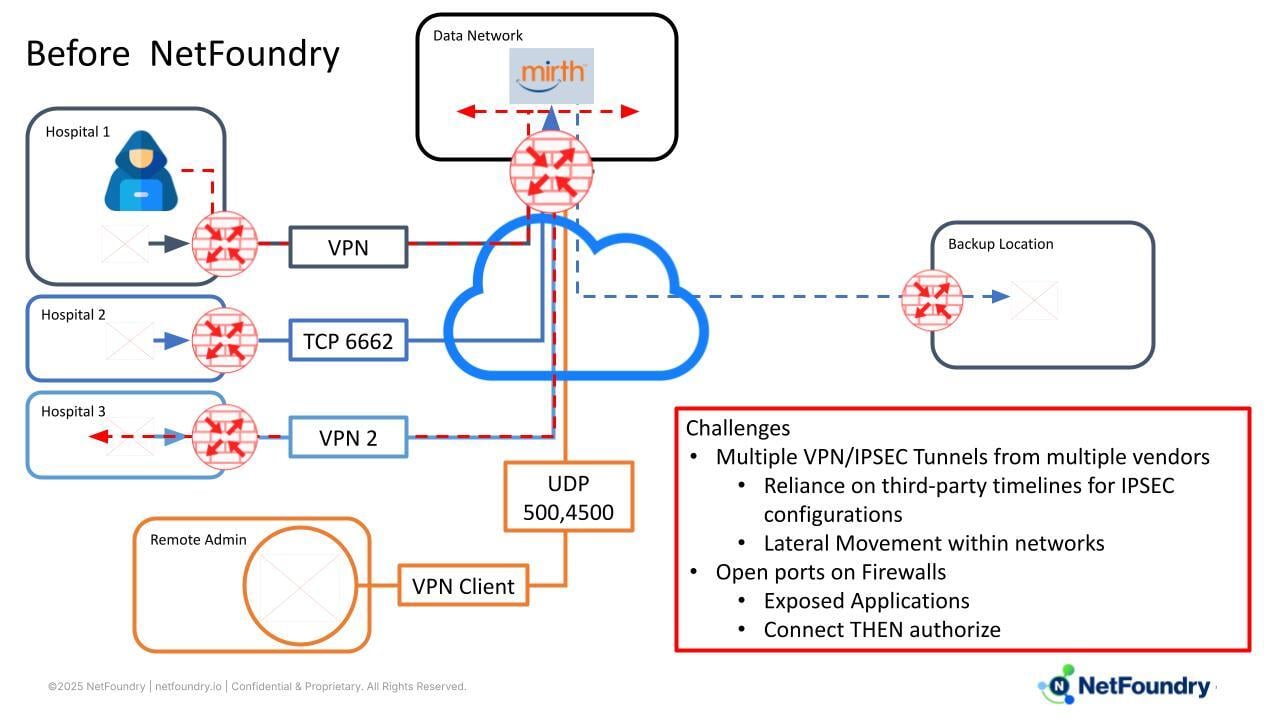
In this demonstration, Jerome Mills, a sales engineer at Net Foundry, showcases the company's Zero Trust software within a healthcare context. He highlights the flaws of traditional VPN setups, noting that they often require weeks to deploy, create exposure points through open ports, and introduce risks like lateral movement and brute-force attacks. In contrast, Net Foundry’s solution secures networks by requiring clients to connect outbound via port 443—bypassing the need for firewall configuration changes—and mandates authorization via an X509 certificate prior to establishing any connection.
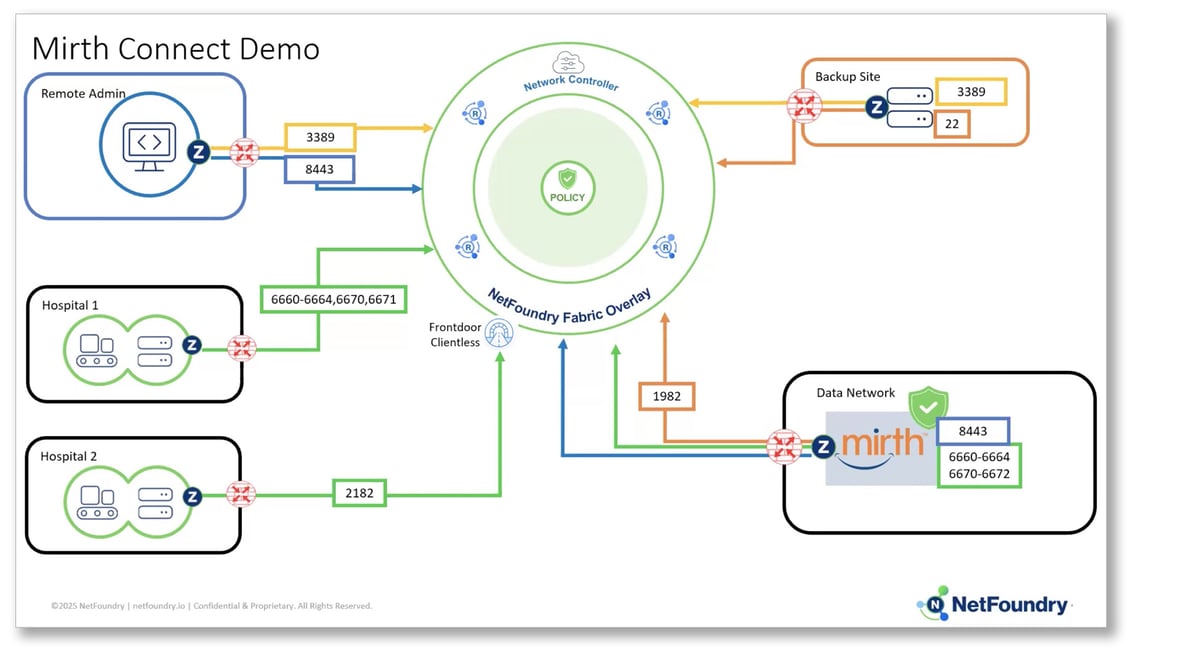 During the demo, Mills successfully tests an RDP connection to a backup site, demonstrating file offloading and the secure processing of HL7 messages. He also verifies that the Mirth administrator application listens solely on the localhost, ensuring traffic does not enter the local network. To conclude, Mills illustrates the software's continuous authorization capability by instantly terminating his active RDP session simply by removing his access attribute in the user interface, before noting the platform's API readiness for CI/CD automation and its flexible deployment options across cloud environments and home data centers.
Three Key Takeaways:
-
Security Through Identity-First Authorization: Net Foundry's solution mitigates the risk of brute-force attacks and lateral movement by requiring users to authenticate via an X509 certificate before a connection is ever established, completely avoiding the open ports and TCP-first connections used by traditional applications.
-
Continuous and Dynamic Authorization: Access permissions are monitored constantly; the demo proved this by showing an active RDP session immediately disconnecting the moment the user's access attribute was revoked in the administrative UI.
-
Simplified Deployment and Scalability: Unlike traditional VPNs that can take weeks to configure, Net Foundry uses outbound connections (port 443) to eliminate firewall modifications, offers API accessibility for seamless CI/CD automation, and provides versatile deployment options including host configurations and virtual machines.